
Tel Aviv
Discover
Tel Aviv
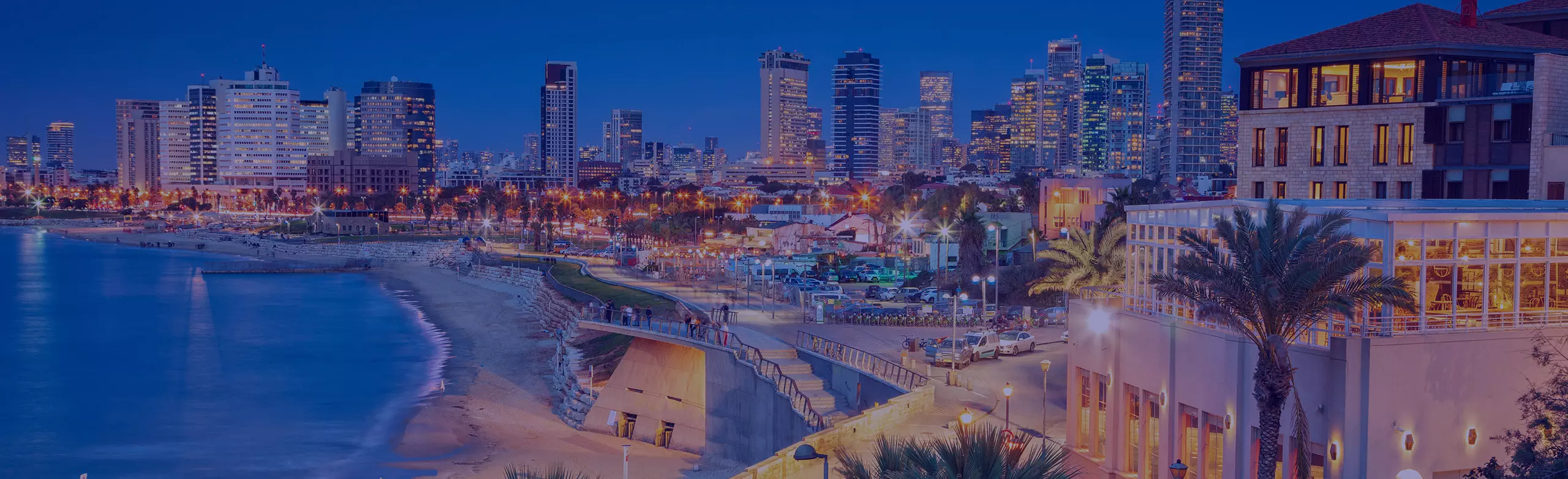
Tel Aviv is Israel's vibrant coastal metropolis on the Mediterranean Sea, located in the central part of the country. The city has a population of about 480,000 people. Founded in 1909 as the first modern Hebrew city, Tel Aviv rapidly expanded after 1925, when architect Patrick Geddes introduced its urban master plan. In 2003, the White City, with over 4,000 Bauhaus and International Style buildings, was designated a UNESCO World Heritage Site. The city combines modern skyscrapers with elegant early 20th-century architecture. Rothschild Boulevard, Dizengoff Street, Allenby Street, and Ibn Gabirol Street are among its busiest thoroughfares, while Rabin Square and Habima Square serve as important public spaces. Highlights include the Azrieli Center, Clock Tower in Jaffa, Tel Aviv Museum of Art, ANU Museum of the Jewish People, and Eretz Israel Museum. Popular beaches include Gordon Beach, Frishman Beach, Hilton Beach, Banana Beach, and Alma Beach. Tel Aviv is also renowned for its outstanding gastronomy, featuring fresh hummus, shakshuka, falafel, sabich, seafood, Mediterranean salads, and innovative fine dining restaurants.





Haifa
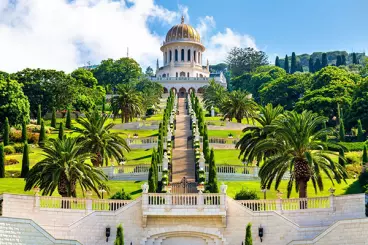
Haifa is Israel's third-largest city, located on the Mediterranean coast at the foot of Mount Carmel, with a population of about 290,000 people. It is home to one of the eastern Mediterranean's largest and busiest ports and serves as a major industrial, technological, and academic center. Modern Haifa was rebuilt in 1761 by Zahir al-Umar, while the city expanded rapidly during the British Mandate after 1922. Haifa is best known for the UNESCO-listed Bahá'í Gardens, the golden-domed Shrine of the Báb, Stella Maris Monastery, and the Haifa Museum of Art. Popular beaches include Bat Galim Beach, Dado Beach, Carmel Beach, Zamir Beach, and Quiet Beach, offering excellent swimming, promenades, and water sports. https://www.touristisrael.com/what-to-do-in-haifa/
Car: 94 km (59 mi), 1:10 hour
Train: 1:10 hour
Bus: 1:50 hour
Jerusalem
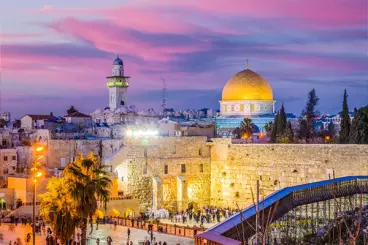
Jerusalem is one of the world's oldest and most significant cities, located in the Judaean Mountains of central Israel, with a population of about 980,000 people. Its history spans more than 3,000 years. King David made Jerusalem the capital around 1000 BC, the First Temple was completed around 957 BC, the Second Temple was completed in 516 BC, and the Dome of the Rock was completed in 691 AD. Major landmarks include the Western Wall, Church of the Holy Sepulchre, Dome of the Rock, Tower of David, Mount of Olives, and the Garden of Gethsemane, making Jerusalem one of the world's most important religious and historical destinations. https://www.itraveljerusalem.com/
Car: 68 km (42.5 mi), 1:00 hour
Train: 0:45 hour
Bus: 0:45 hour
Nazareth
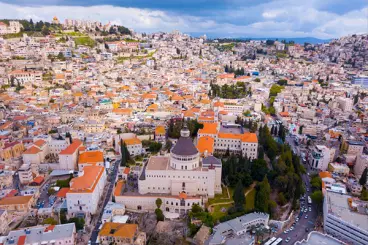
Nazareth is the largest Arab city in Israel, with a population of about 80,000 people. It is regarded as the childhood home of Jesus Christ and is one of Christianity's most important pilgrimage destinations. The Church of the Annunciation was first established in 326 AD, while the present Basilica of the Annunciation was completed in 1969. Other notable landmarks include St. Joseph's Church, the Synagogue Church, Mary's Well, the Greek Orthodox Church of the Annunciation, the Old Market, and the Nazareth Village open-air museum. A unique attraction is the annual Nazareth Christmas Market, one of the largest Christmas celebrations in the Middle East. https://israel.travel/nazareth/
Car: 105 km (66 mi), 1:25 hour
Bus: 1:45 hour